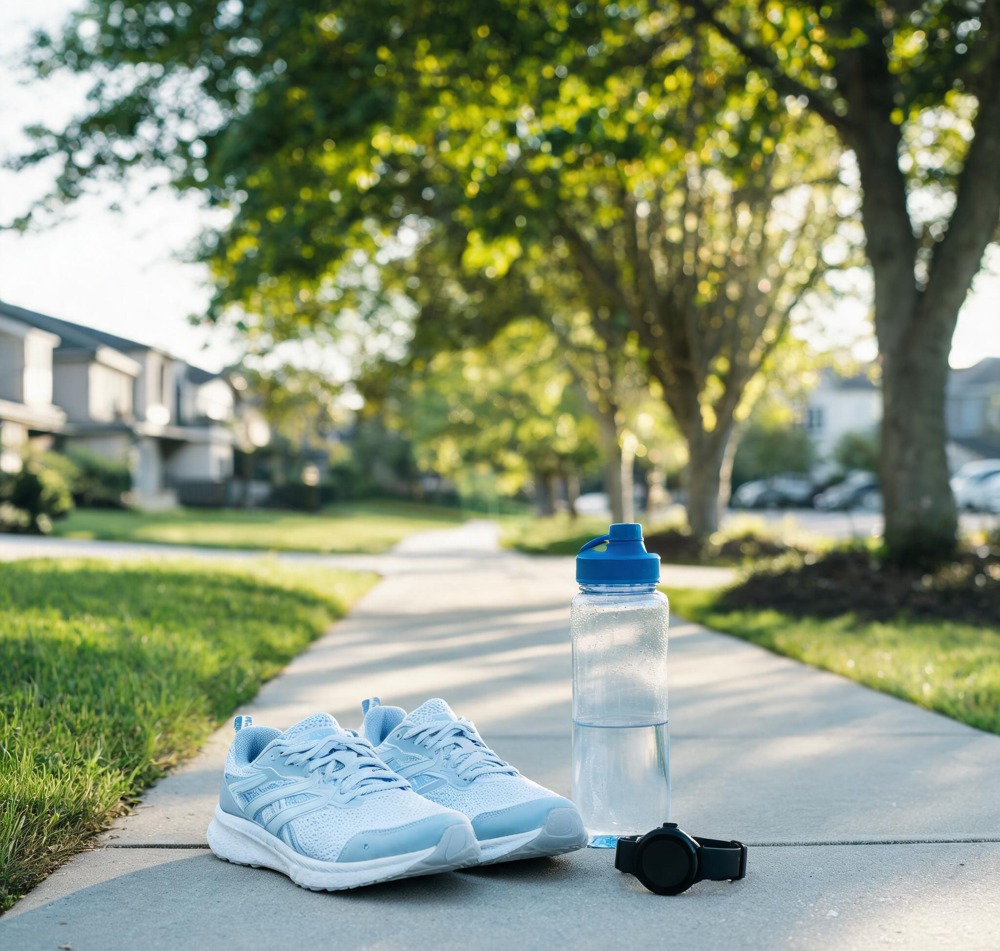
Letting easy walks become real exercise
Starting smaller than you think you need
Many adults assume movement has to be intense, sweaty, and a bit miserable before it “counts.” That belief quietly blocks progress. Gentle walking already asks the heart, lungs, and muscles to work more than they do on the sofa. For people who sit a lot, are returning from a break, or manage joint issues, softer movement is often the only kind that feels realistic most days. A smart approach is to shrink the starting line: pick a 10‑minute window you can repeat on almost any weekday, such as after breakfast or before dinner. Treat this as a minimum, not a test. If you feel like going longer once you are outside, that is a bonus, not a rule. Consistency at a modest level helps both body and brain accept walking as normal life, rather than a challenge that needs big motivation.
Why “good enough” beats “all or nothing”
Early on, distance and speed matter far less than showing up. A gentle walk on most days creates a pattern your joints, muscles, and nervous system start to expect. Even on days when you are tired, a short, slow stroll protects the habit from disappearing. In contrast, chasing big numbers often backfires: people push hard on a “good” day, feel sore or wiped out afterward, then avoid walking for several days. Over weeks, a softer but steady pattern leads to better stamina, steadier mood, and fewer aches than a cycle of heroic bursts followed by long gaps. The real win is building a rhythm that survives busy work weeks, rough sleep, and changing weather.
Making comfort part of the plan
Comfort is not a luxury; it is a strategy. Supportive shoes, breathable clothing, and routes that feel safe and pleasant are what make a routine stick in real life. Posture matters too: let shoulders relax, look ahead instead of down, and allow your arms to swing naturally. Shortening an overly long stride so your foot lands under your body can ease stress on knees and hips. These details help keep walking in the “this feels good” category instead of “this hurts,” which is crucial if you want tomorrow’s walk to actually happen.
Simple comparison of early walking options
| Option type | Feels like in daily life | Best suited for |
|---|---|---|
| One longer walk | A single focused outing with clear start and end | Quieter days, people who like set routines |
| Several short “movement snacks” | Quick loops between tasks or errands | Busy schedules, those easily bored by long walks |
| Mostly indoor walking | Hallways, stairs, indoor tracks or malls | Bad weather, safety concerns, limited daylight |
| Mostly outdoor routes | Streets, paths, parks, mixed terrain | Mood support, variety, fresh air and scenery |
Using one or a mix of these lets you match comfort, time, and surroundings instead of forcing a rigid pattern.
Turning casual strolls into heart‑friendly movement
Finding a pace that feels “purposeful but calm”
A useful effort level for most people sits just above an easy amble. Imagine your normal “store stroll” as level one. For gentle stamina, aim for level two: arms swinging a bit more, steps landing quietly but decisively, breathing deeper yet still comfortable. You can talk in short sentences, though you might not want to chat nonstop. There is no single correct speed or step rate, because height, fitness, and terrain all differ. A better guide is how you feel at the end of the walk: slightly warm, pleasantly worked, and able to repeat something similar tomorrow. If you finish gasping or limping, the pace was probably too ambitious for now.
Playing with short “push” segments
You do not need a full interval program to see gains. Lightly raising effort for brief stretches can help your heart and lungs adapt while keeping impact low. Choose a point ahead—a tree, corner, or sign—and walk toward it at a slightly brisker pace, then ease back to normal for a few minutes. These mini “push” sections can last one or two minutes and fit neatly into a 10‑ or 15‑minute outing. Over time, you can add an extra segment or lengthen one by a minute. The body experiences a change in challenge without the stress of an all‑out workout.
Using tools without becoming obsessed
Step counters and apps can be helpful if they stay in the background instead of taking over. Some people like watching an average daily step count rise bit by bit; others prefer tracking minutes walked or days per week. If data motivates you gently, use it. If it sparks guilt or pressure, keep it looser: note in a notebook how often you walked and roughly how long. The main aim is noticing what makes you feel more awake, clear‑headed, and settled in your body, then doing a bit more of that.
Blending movement into busy schedules
Linking walks to routines you already have
Anchoring walks to daily habits keeps them from being squeezed out. You might pair a short loop with your morning drink, a stroll with a regular phone call, or a relaxed walk after the evening meal. Over time, the brain links them: “After this, I walk.” That makes the choice almost automatic. Family time can include a slow group walk, pets often enjoy a longer route, and solo walks can double as a chance to listen to music, an audiobook, or silence—whichever feels restful.
Using “movement snacks” when time is tight
Work and study days easily vanish into chairs and screens. Tiny walking breaks interrupt that pattern. Five to ten minutes around a building, up and down a quiet street, or along a nearby path can loosen stiff hips, refresh attention, and lift mood. Some people schedule these breaks in a calendar; others use natural pauses, such as finishing a task or waiting for a call to start. Even if each break feels small, three or four in a day create more total movement than one big walk that keeps getting postponed.
Respecting limits on demanding days
Busy, physically heavy, or emotionally draining days do not need extra pressure. On those days, a very short, easy stroll—or even skipping intentional movement entirely—can be the kindest choice. Signs you might need to scale back include dread before a walk, soreness that does not fade, or constant fatigue. Adjusting duration, terrain, or time of day is not failure; it is how a routine survives the unpredictable reality of work, caregiving, and social life.
Fine‑tuning posture, muscles, and routes
Letting form carry some of the workload
The way you move affects how walking feels. Aim for your foot to land under your body, not far in front, which softens impact on joints. Think of gently pushing the ground away behind you instead of “pulling” yourself forward with your knees. Light engagement in the muscles around your hips and glutes helps drive each step so bones and ligaments do less of the heavy lifting. If your stride sounds loud or slappy, try slightly shorter steps and a softer landing to smooth things out.
Using your upper body as free support
Your upper body can either help or hinder you. Keep your head stacked over your shoulders, not hanging forward toward a screen. Let your arms swing comfortably with elbows bent and hands relaxed. This arm movement adds a bit of rotation through the ribs and spine, helping balance and momentum. An open chest allows deeper breathing, which makes gentle cardio feel easier at the same pace. These are small details, but practiced on many walks, they accumulate into a smoother, more enjoyable stride.
Choosing surroundings that match your energy
Not every route suits every day. Flatter, smoother paths feel kinder on low‑energy days or for sensitive joints. Slight hills or varied terrain gently challenge muscles in different ways on days you feel stronger. Some people prefer quiet side streets or parks to avoid traffic and noise; others enjoy busier areas for a sense of company and safety. Paying attention to lighting, weather, and how crowded an area feels also matters, especially in early mornings or later evenings.
Simple guide to picking a route
| Route style | How it typically feels | When it tends to work best |
|---|---|---|
| Flat, smooth paths | Predictable, joint‑friendly, low effort | Low‑energy days, beginners, sensitive knees |
| Gentle hills or slopes | Slightly stronger leg and heart work | When you want a bit more challenge |
| Nature‑heavy paths | Calming, change of scenery, softer sounds | Stress relief, mood support |
| Busy, well‑lit streets | Lively, people around, more distractions | Early or late walks, those who prefer company |
Mixing these through the week keeps walking interesting while allowing you to match route to your current energy and comfort.
Keeping motivation soft, kind, and sustainable
Setting goals that fit real life
Ambitious plans sound exciting but rarely last. A friendlier option is picking a baseline you can manage on a rough week, not a perfect one. For many adults, that might be one 10‑ to 15‑minute walk most days. From there, you can add an extra day, extend one walk slightly, or weave in a short brisk segment. Progress is measured in how often movement happens, how your body feels, and how well walking fits your life, not in dramatic weekly leaps.
Supporting movement with everyday choices
Small lifestyle details quietly affect how walking feels. Restful sleep helps muscles recover and keeps daytime energy steadier. Eating balanced meals, not too heavy right before a walk, can prevent sluggishness or discomfort. Drinking water regularly rather than gulping a lot at once keeps joints and circulation happier during movement. None of these need to be perfect; even small improvements can make each stroll more comfortable, which in turn makes you more likely to walk again.
Being patient with ups, downs, and plateaus
Motivation, mood, and energy naturally rise and fall. Planning a “bare minimum” route for low‑motivation days keeps the habit alive: perhaps a simple loop around the block you can complete in about five to ten minutes. Some people enjoy marking each walk on a calendar as a tiny visual reward. Instead of chasing constant improvement, it helps to think in seasons. Some weeks will feature longer or brisker walks; others will be quieter. As long as movement remains a recurring part of life, gentle cardio benefits, lighter moods, and steadier stamina will continue to build quietly in the background.
Q&A
- How can I design a healthy walking routine that I’ll actually stick to long term?
Start with short, consistent walks (10–15 minutes), anchor them to daily habits like after meals, track progress with an app, and adjust duration or terrain gradually to keep it enjoyable and sustainable.
- What are realistic daily step goal ideas for beginners and office workers?
For most adults, 6,000–8,000 steps is a realistic start, especially with a desk job. Build up in 500–1,000 step increments every 1–2 weeks, focusing on consistency over hitting 10,000 immediately.
- What counts as effective low-impact cardio habits besides traditional walking workouts?
Gentle hill walking, mall walking, slow stair use, strolling phone calls, walking meetings, and light neighborhood loops all qualify as low-impact cardio when done regularly and slightly elevating heart rate.
- How do I find a comfortable walking pace that still improves my fitness?
Aim for a pace where you can talk in short sentences but not sing. Slightly breathless yet controlled breathing usually indicates a moderate-intensity, comfortable pace that supports cardiovascular gains.
- How can outdoor fitness planning support everyday activity balance and simple movement motivation?
Plan varied routes with parks or green spaces, schedule walks at different times of day, combine errands with walking, and keep backup indoor routes so movement feels flexible, enjoyable, and easy to maintain.