Why an Evening Walk Can Balance Your Day
A balanced evening walk routine can be a gentle bridge between a busy day and a calmer night. After hours of sitting, screen time, or rushed tasks, a short walk offers gentle daily movement that helps you unwind physically and mentally. Many health guidelines encourage regular, moderate activity across the week, and heading out after your main responsibilities is an approachable way to meet part of those recommendations without turning it into an intense workout. Because walking is low impact and easy to match to your pace, it suits different ages and fitness levels, becoming a practical part of a healthy lifestyle routine rather than a demanding fitness challenge.
Going outside for a simple walk can also build outdoor wellness habits without special gear or a strict training plan. Noticing the changing light, feeling fresh air, and stepping away from indoor noise can signal that the day is winding down. Over time, this familiar pattern in the evening can help you separate work or family duties from personal time, so movement becomes an anchor in your schedule instead of something you keep postponing. By keeping expectations realistic—light activity, stress relief, and a steady daily rhythm—an evening walk stays sustainable and balanced, fitting naturally into everyday life instead of taking it over.
Planning a Realistic Evening Walking Schedule
A realistic evening walking plan starts with an honest look at your current routine. Map out when you usually finish dinner, your typical family or work commitments, and when you like to wind down for sleep. The aim is a balanced evening walk routine that fits into your life instead of competing with it. Many adults try to move most days of the week, but you should adjust for your fitness level, health conditions, and natural energy. If you are new to gentle daily movement, begin with shorter walks on fewer days and build up gradually so the habit feels achievable rather than disruptive.
Once you see where your evenings have space, choose specific time windows instead of vague intentions. A short walk 30 to 60 minutes after dinner works well for some people, while others prefer going out sooner to avoid feeling too full. A simple approach to walking schedule planning is 10 to 20 minutes per outing, three to five evenings a week, with the option to add time as walking becomes easier. On days when you are busy or tired, an even shorter stroll can still protect your simple fitness consistency. Focus on making movement regular, not perfect.
As your stamina improves, slowly adjust duration, pace, or the number of walking days so your evening routine continues to feel balanced. Some people group several brief walks across the week, while others choose fewer but slightly longer sessions; either style can support a healthy lifestyle routine when it feels safe and comfortable. Tying walks to cues you already follow, such as clearing the table, washing dishes, or turning off your work computer, makes your planned movement more automatic and less likely to be pushed aside, helping it become a steady part of daily life.
| Scenario | Typical Time Window After Dinner | Walk Pattern | Consistency Level | Best For |
|---|---|---|---|---|
| Busy Weeknight Professional | Short late‑evening slot | Brief walk on several evenings | Moderate consistency | People with long workdays |
| Family‑Focused Evening | Shared time after dishes | Stroll with family a few evenings | High consistency | Caregivers wanting shared movement |
| New to Gentle Daily Movement | Flexible early‑evening window | Very short, slow walks on fewer days | Building consistency | Beginners easing into activity |
| Active but Time‑Pressed | Tightly planned early slot | Faster, slightly longer walks on select days | Variable consistency | Those already somewhat active |
| Calm Wind‑Down Routine | Regular pre‑bed slot | Unhurried walk most evenings | High consistency | People seeking a relaxing habit |
Fitting Your Walk Around Work, Family, and Dinner
To make a Balanced Evening Walk Routine realistic, start with the fixed points in your day: when work ends, usual family time, and your dinner hour. Plan gentle daily movement by pairing it with one anchor, such as changing into walking shoes right after work or taking a short stroll with a partner or child after homework. Treat this as a simple fitness commitment, but give yourself a flexible window, like sometime between 7 and 8 p.m., so minor delays do not derail your plan.
If you like walking after eating, treat it as a relaxed post dinner activity, often 20 to 30 minutes after the meal. On nights with late meetings or family events, shorten the route or stay closer to home rather than skipping. This kind of adaptable walking schedule planning supports long term consistency and helps your overall healthy lifestyle routine fit around real world demands.
Designing a Gentle and Enjoyable Route
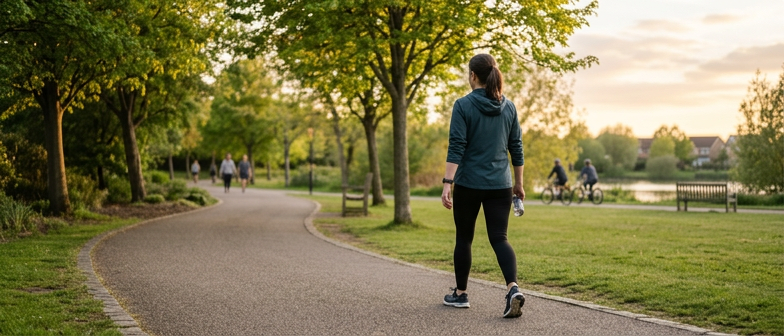
A balanced evening walk routine starts with choosing a route that feels inviting rather than exhausting. Look for streets, paths, or park loops that allow gentle daily movement, with mostly flat or mildly rolling terrain so your joints and breathing are comfortable. If you enjoy nature, a tree-lined sidewalk, waterfront path, or neighborhood greenway can turn a short walk into a calming part of your healthy lifestyle routine. Pay attention to lighting, footpath quality, and traffic patterns, aiming for well-lit routes with smooth, even surfaces and safe crossings so you can relax instead of constantly watching your step.
Safety and comfort help evening walks become a long-term outdoor wellness habit instead of a short experiment. Plan a distance and shape that feel manageable, such as an out-and-back route that is easy to shorten on tired days, or a small loop you can repeat if you have more energy. Notice where benches, public restrooms, and water fountains are, and keep your route close enough to home that you can return quickly if the weather changes. Walking with a friend, family member, or friendly neighbor can make the route feel more enjoyable and secure, and using light layers, reflective details, and comfortable shoes keeps the experience gentle so you want to come back to it most evenings.
Simple Ways to Keep Evening Walks Comfortable and Safe
To keep a balanced evening walk routine comfortable, wear breathable layers and supportive shoes suited to your usual route. Treat your walk as gentle daily movement, not a race, and start at a pace that lets you talk easily so it feels like a steady, healthy lifestyle routine you can repeat.
As daylight fades, choose well‑lit paths, add light or reflective clothing, and watch for uneven ground, bikes, and traffic. Keep headphone volume low so you can hear what is around you and carry a charged phone. With these simple awareness habits, your outdoor wellness routine can stay both safe and relaxing.
Post‑Dinner Walking and Your Evening Routine
A short, relaxed walk after your evening meal can become a simple anchor in a balanced evening walk routine. Instead of treating it as a workout, you can treat it as gentle daily movement that helps you shift out of the busyness of the day. Many people find that strolling at a comfortable pace after dinner feels easier on the body than more intense exercise, and it can be adapted to different fitness levels by adjusting distance and speed. Building this into a healthy lifestyle routine is less about hitting a certain step count and more about showing up consistently, even if some nights you only step outside for ten minutes around the block.
To fit a walk after dinner into your schedule, consider how it works alongside screen time, family activities, and your usual bedtime. Some people prefer to go out soon after clearing the dishes, while others like a brief pause before heading outside, especially if they have eaten a large meal. Paying attention to your own comfort, including how your stomach feels and how close it is to sleep, can guide the timing. Keeping the pace light and finishing well before bedtime can support an evening rhythm that feels calm and sustainable, turning this planned walking habit into a dependable way to unwind without relying only on phones, television, or late‑night snacking.
Q&A
-
What does a balanced evening walk routine actually look like?
It usually means a short, steady walk most evenings at a comfortable pace, scheduled so it fits naturally between dinner and your usual wind‑down time, without feeling like a hard workout. -
How can I plan an evening walking schedule I will realistically follow?
Start from your existing habits: note when you finish work, eat, and go to bed, then pick two or three evenings to walk for 10–20 minutes and adjust gradually as it becomes easier. -
How do I fit an evening walk around work, family, and dinner?
Use an existing routine as an anchor, such as walking right after clearing the dinner table or after children finish homework, and keep a flexible time window so delays do not cancel the walk. -
What makes a good, gentle route for an evening walk?
Choose well‑lit streets or park paths with even surfaces, light traffic, and terrain that feels easy on your joints so you can focus on relaxing instead of worrying about obstacles. -
Is a short walk after dinner enough to support a healthy routine?
For many people, a 10–20 minute post‑dinner stroll is a manageable way to add regular movement, and the consistency over weeks matters more than distance on any single night.